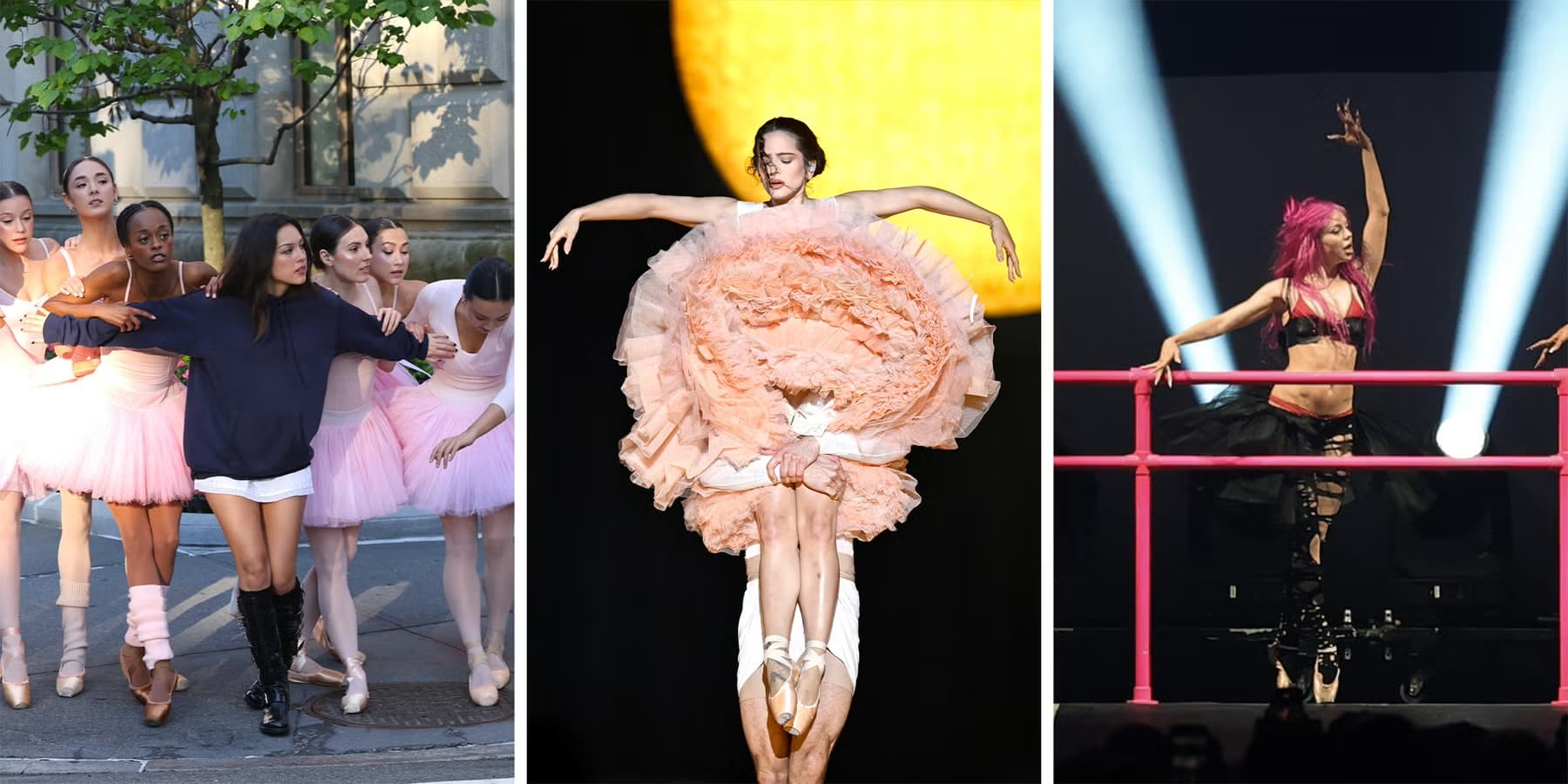
For most of the last century, ballet and chart topping pop lived on opposite sides of the cultural map. One belonged to gilded opera houses and season subscribers, the other to radio waves and stadium tours. That line has all but dissolved. Across this year's biggest videos, tours and award show moments, pointe shoes and classical technique have become the look that pop's leading women keep reaching for.
The clearest example arrived with Olivia Rodrigo's video for "stupid song," a production that treats ballet not as a backdrop but as the main event. New York City Ballet principal Tiler Peck choreographed the piece and danced in it herself, leading a company of trained ballerinas through the streets of the city and into Central Park at dawn.
A video shot before the city woke up
Peck assembled a lineup drawn straight from the professional ranks, performing alongside fellow NYCB dancers India Bradley, Kayla Mak, Kloe Walker, Rommie Tomasini, Grace Scheffel, Kennedy Targosz and Lauren Collett. Dressed in blush pink leotards and pointe shoes, the group filmed from six in the morning until eleven, catching the soft early light before traffic and crowds took over.
What stood out to Peck was the decision to hire dancers who had spent their lives in the studio rather than models asked to fake the form. "We finally have an opportunity to get something right in the ballet world," she said, pointing to how rare it is for the discipline to be represented by people who actually train in it.
She framed the collaboration as a gift to her own art form as much as a credit on a pop video. "Highlighting ballet in a video that can reach so many people is also doing ballet such an amazing thing," Peck said, noting the size of the audience an Olivia Rodrigo release can command in a single afternoon.