There is a particular sensation Elena Von Kohn is chasing, and it is not the dream itself. It is the moment just after, when you try to recount the dream over breakfast and find that every word you reach for is slightly wrong. Her paintings live in that gap between the vivid experience and the failure to explain it, and she has given the pursuit a name of her own. She calls it enigmatic surrealism.
The label is not a marketing flourish. It describes a genuine method, one built on holding two things in tension at once.
I've always been drawn to the space between the conscious and unconscious.
From Leipzig to Moscow to the Arizona desert
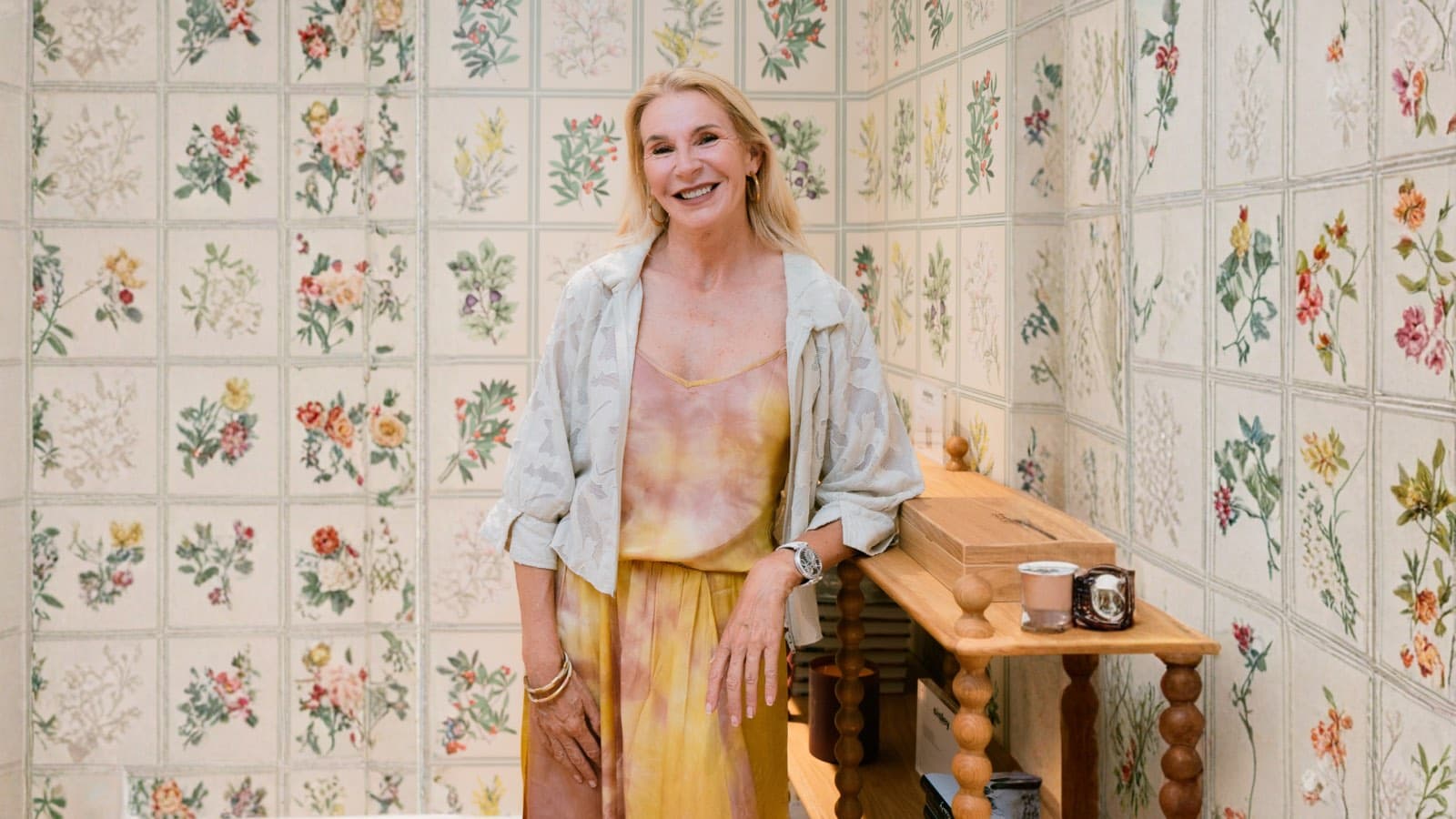
Von Kohn's path to that space was unusually early and unusually rigorous. Born in Germany, she was drawn into Moscow's art world as a small child, and by the time most children are learning to read she was already learning to paint. She trained at the Moscow Art School for Gifted Children and went on to earn a Master of Fine Arts, graduating Summa Cum Laude, a pedigree that gave her the classical command she would later bend toward stranger ends.
In the mid 1990s she crossed the Atlantic, moving through Montgomery, Alabama, and Naples, Florida, before settling in Scottsdale, Arizona, where she works today. The trajectory matters. A rigorous European and Russian training carried into the wide light of the American Southwest helps explain why her work can feel both old world in its craft and untethered in its imagination.
Reality, layered with the inexplicable
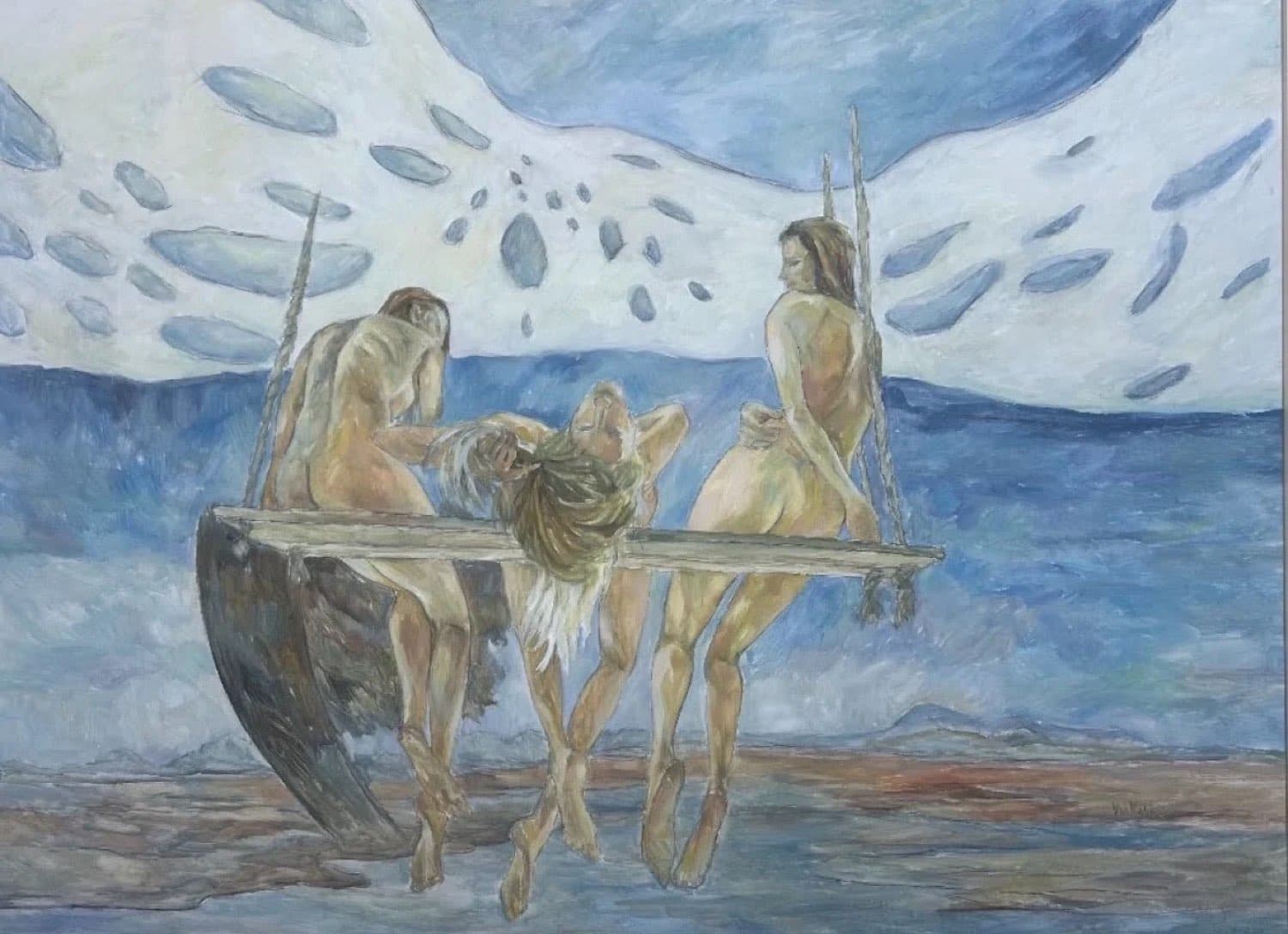
What separates enigmatic surrealism from surrealism as most people picture it is where Von Kohn plants her feet. She does not abandon the recognizable world. Instead she starts with something tangible and then complicates it, letting abstraction seep in until the scene tips into mystery.
I add layers of abstract elements on tangible scenes to provoke a sense of mystery and contemplation.
The human figure is almost always at the centre of that process. Bodies appear across her canvases not as objects but as arguments, standing in for the freedom and self determination she keeps circling back to. For Von Kohn, the figure is where the philosophy becomes visible.
The human body, often seen in my paintings, celebrates self-expression and free will.
She sums up the whole approach in four words that could serve as a manifesto, describing her art as a fusion of reality and enigma. The reality keeps the viewer grounded. The enigma is what refuses to resolve, and that refusal is the point. A finished Von Kohn painting does not answer a question so much as leave you turning one over.
Recognition, and a leap into the digital
The art world has taken note. Her paintings have entered the collections of institutions including the West Valley Art Museum in Arizona, the Montgomery Museum of Fine Art, and the Russian Consulate in Bulgaria, and she has gathered honours along the way, among them Moscow Artist of the Year, the Bulgarian International Artist Award, and a Russian Art Ambassador Award.
More recently she has pushed her work onto new terrain, translating her oil paintings into digital form and releasing a collection titled Dancing With Gravity, available both as fully digital pieces and as original oil on canvas. It is a notable move for an artist so rooted in traditional technique, and a sign that the enigma she paints is meant to travel, reaching audiences well beyond the gallery wall.
That combination, a classically trained hand and a restless appetite for the new, is what gives her a claim on the future of the form. Surrealism has spent a century trying to picture the unconscious. Von Kohn's contribution is to stop picturing it and start simulating the feeling of it, so that her audience leaves not with an image to decode, but with a mood they cannot shake.