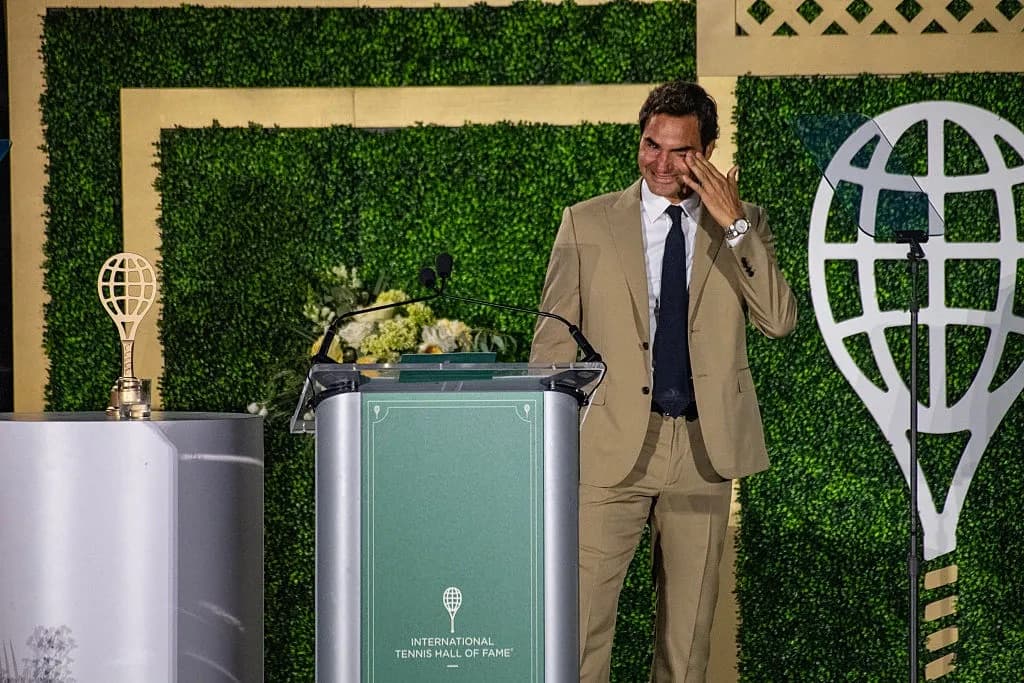
Roger Federer walked into the International Tennis Hall of Fame in Newport, Rhode Island, on August 29, 2026, and immediately proved that even a career built on composure has its limits. The 45 year old, dressed in a tan suit, kissed and hugged his wife Mirka after she introduced him, then spent much of his nearly 30 minute speech fighting back tears.
A speech that kept breaking
Federer called the moment one of the greatest honors of his life, and admitted that putting the feeling into words was harder than it looked from the outside. He traced the arc of his own career all the way back to its least glamorous beginning, working as a 13 year old ball boy at an ATP tournament in his hometown of Basel, long before that same tour would eventually crown him one of its defining champions.
Inducted alongside a voice of the sport
Federer entered the Hall of Fame in the same class as Mary Carillo, the broadcaster and journalist whose commentary has shaped how generations of fans understood the matches Federer himself was playing. Pairing a player with the broadcaster who helped narrate the sport's biggest moments made the ceremony feel less like a single man's coronation and more like a recognition of everyone who builds tennis into something worth watching.