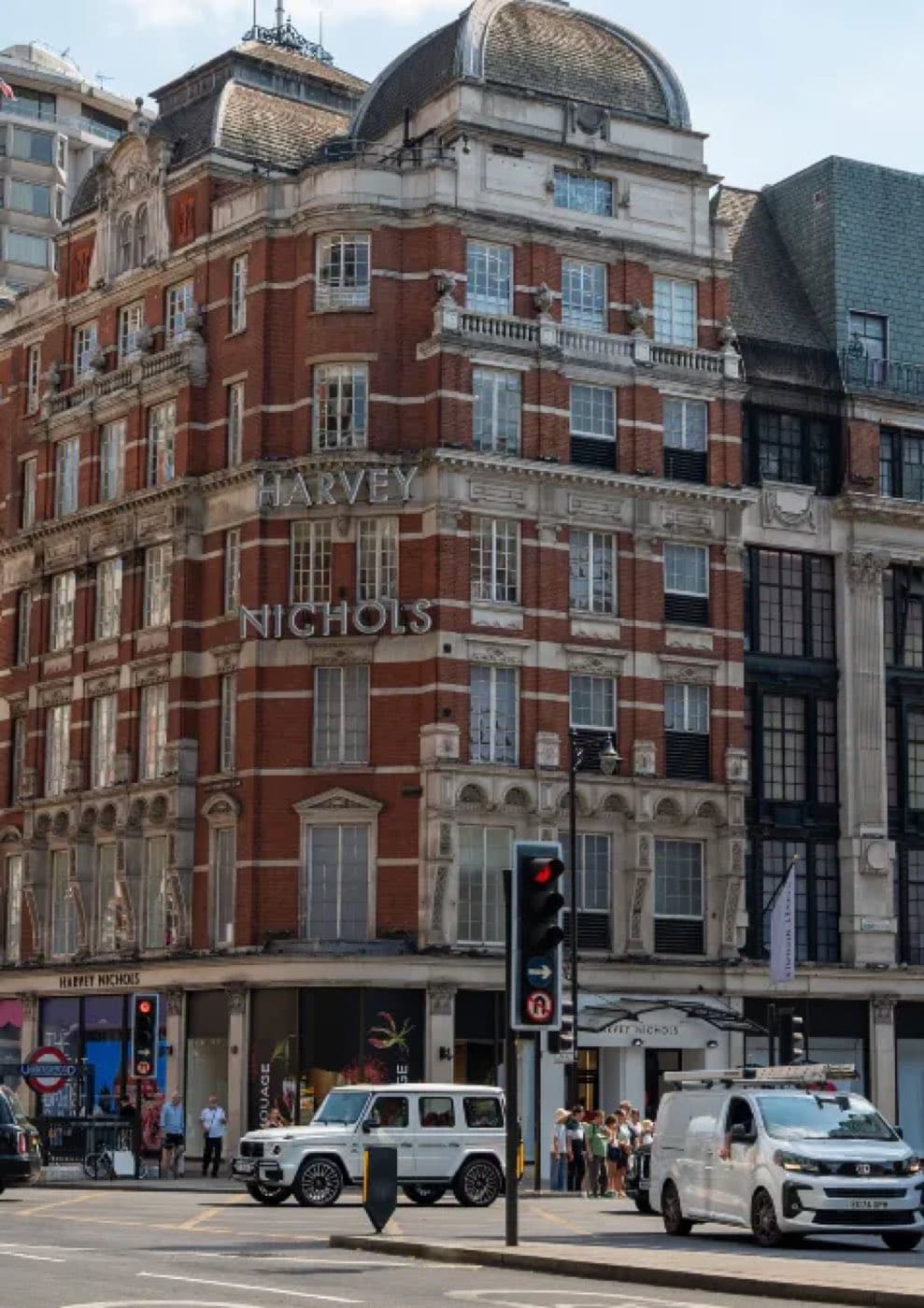
One of the best known names in British retail has changed hands. Frasers Group, the sprawling company built by Mike Ashley, confirmed on August 13 that it had acquired Harvey Nichols, the luxury department store whose Knightsbridge flagship has been a fixture of London shopping for generations. The price was not disclosed, but the ambition behind the deal was made unusually plain, and it is not a sentimental one.
The purchase adds a storied brand to a group that already owns Sports Direct, Flannels, and The Webster, and it lands after a competitive chase. When Harvey Nichols invited bids in July, offers were expected in the region of 50 to 60 million pounds, and Frasers saw off rival interest from Next and from Modella Capital, the owner of Hobbycraft and TGJones. In the end it was Ashley's company that walked away with the keys.
What Frasers is actually buying
The deal is broad. It covers six stores, the Knightsbridge flagship along with sites in Manchester, Birmingham, Bristol, Leeds, and Edinburgh, as well as the online business, the existing stock, and more than a thousand employees. The company's international franchise stores will keep trading under their current licensing arrangements, and the Dublin store remains supported by Frasers. On paper, the group has bought a national institution more or less intact.
The seller is Sir Dickson Poon, who bought Harvey Nichols from the Burton Group back in 1991 and shaped it for more than three decades. After stepping down as a director in June, Poon brought in advisers at FTI Consulting to find either fresh investment or a full buyer, a process that has now ended with Frasers in control.
A business in real trouble
The reason a name this prestigious was available at all is written in its accounts. Harvey Nichols has not posted a profit since 2019, and the losses have grown alarming. For the year ending in late March 2025 it recorded a post tax loss of 177.6 million pounds, a startling figure that followed a 12.9 million pound loss the year before and a 4 million pound loss the year before that. The company points to the damage done by the pandemic and by the end of tax free shopping for overseas visitors, which hit luxury sellers in the United Kingdom especially hard.
That decline is as much about aura as it is about arithmetic. Harvey Nichols was once shorthand for a certain kind of glamour, immortalised by the 1990s comedy Absolutely Fabulous and frequented by figures like Princess Diana, Kate Moss, and Marc Jacobs. Some of that shine has faded, and restoring even part of it is the challenge Frasers has chosen to take on.
No soft rescue
Ashley, who founded and chairs the group, was characteristically blunt about how he sees the economics of the deal.