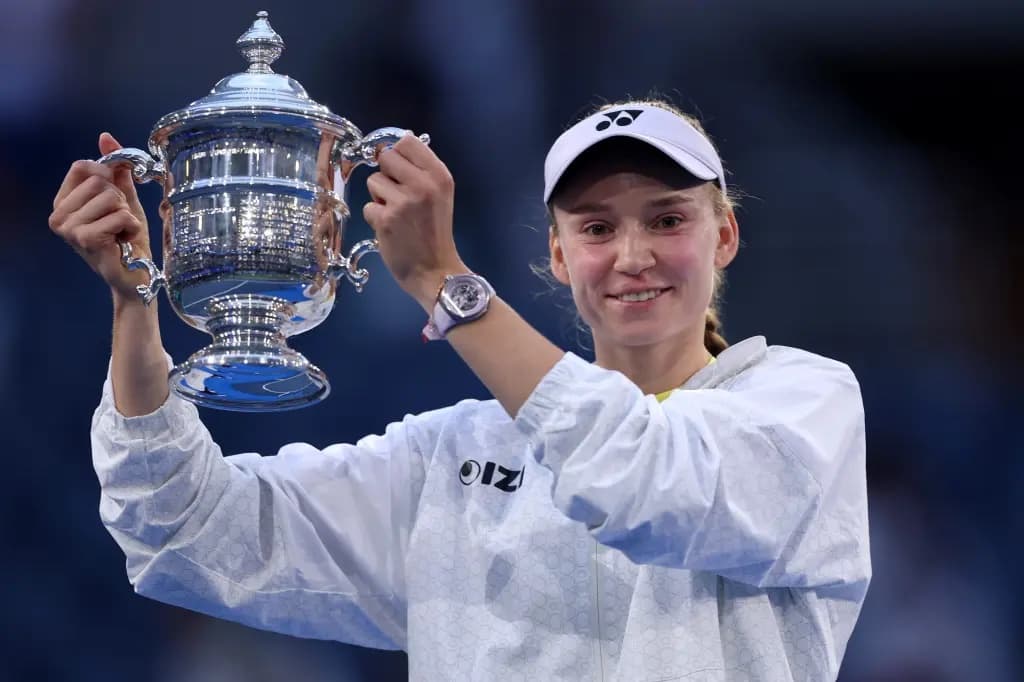
About ten years ago, a teenage Elena Rybakina faced a decision most parents would consider obvious, roughly 15 American colleges wanted her, and her father wanted her to go. He was worried, he has said, watching his daughter chase professional tennis while the family struggled financially and injury could end the whole bet at any moment. Rybakina turned every offer down anyway. This month she became the world number one ranked woman in tennis.
A bet against the safe option
The math behind her father's concern was not irrational. A college scholarship is a guaranteed outcome, a degree, a safety net, a career path that does not depend on staying healthy or beating whoever happens to be on the other side of the net that week. Professional tennis offered none of that certainty, only the possibility of it. Rybakina chose the possibility, betting her teenage years on a sport where most players who try to go pro never come close to a Grand Slam final, let alone a world number one ranking.
A second bet, on a different flag
The college decision was not the only long shot she took early. Rybakina represented Russia from 2014 to 2018 before switching her citizenship to Kazakhstan, a move driven largely by the funding and support the Central Asian federation was willing to put behind her career. The switch paid off in historic fashion, when she won Wimbledon in 2022, she became the first Kazakhstani player ever to win a Grand Slam title, turning a financially motivated federation swap into a piece of national sports history.